 Pardi Bali Tour
Manta Point or Manta Bay: choosing your Nusa Penida snorkel trip
Two snorkel spots off Nusa Penida, two different days at sea. How to pick the joint trip that suits your group.

Seeing a manta ray glide underneath you is one of those moments people talk about for years. They're enormous, calm and surprisingly graceful, and around Nusa Penida, the rugged island just across the water from Bali, you have a real chance of snorkeling with them in a single morning.
The question most travellers end up asking is which trip to take. Our two joint snorkel trips go to two different spots, Manta Point and Manta Bay, and while both are about the mantas, they make for quite different days at sea. This guide walks through what each site is like, how they compare, and how to choose the one that suits your group, your budget and your comfort in the water.
Two manta sites off Nusa Penida
Both trips follow the same basic shape. You meet the group, board a shared boat and cross the Badung Strait towards the cliffs of Nusa Penida. After time in the water with the mantas, you climb back on board and head back to Bali. We confirm the meeting point and time for your date when you book.
The big difference is where you get in the water. Manta Point and Manta Bay are separate sites with their own character, their own sea conditions and their own reasons for attracting mantas. One is about watching rays visit a cleaning station; the other is about seeing them feed near the surface in bright, open water.
What "joint" means
Both are joint trips, which simply means you share the boat with other travellers rather than chartering it for your group alone. It's an easy, good-value way to reach the manta sites, and for many people it's part of the fun: everyone on board is there for the same reason, and the excitement when someone spots the first ray is contagious.
Manta Point: the cleaning station
Manta Point is known as one of the most reliable places around Bali to snorkel with reef manta rays. The reason is a cleaning station: an area of reef where small fish pick parasites and dead skin off the mantas. The rays return to these spots again and again, circling slowly and hovering while the cleaner fish do their work.
For a snorkeler, that behaviour is a gift. Mantas at a cleaning station tend to move in unhurried loops, so you can float at the surface and watch them pass below and around you, sometimes more than once. Seeing a ray the width of a small car turn gently beneath you is hard to describe and easy to remember.
The trade-off: open water
Manta Point faces more open sea, and the water here can be cooler and choppier than elsewhere around Bali. On some days the swell is gentle; on others the boat rocks and getting in and out of the water takes a bit more effort. It's not a place to try snorkeling for the very first time.
If you're comfortable in open water and the cleaning station is what draws you, Manta Point is the trip to pick. Just tell us your swimming level when you book, so we can talk it through honestly.
Manta Bay: turquoise water and feeding mantas
Manta Bay is known for manta rays feeding close to the surface. Mantas are filter feeders, cruising with their huge mouths open to sieve plankton from the water, and when the food is near the top, so are they. That makes the bay a natural fit for snorkelers, who see the action from the surface rather than looking down into deeper water.
The setting is part of the appeal. You snorkel in bright turquoise water below Nusa Penida's green cliffs, and even the moments between sightings are lovely. As with any sea trip, conditions on the day decide how long you can stay in the water.
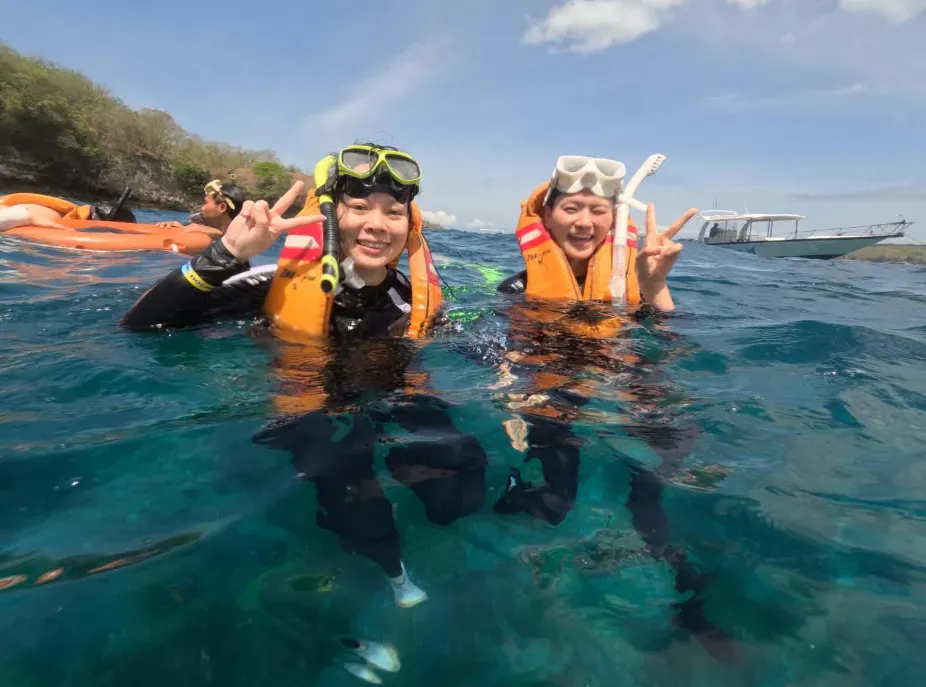
Manta Bay is also the lower-priced of our two manta trips, starting from IDR 1,400,000 compared with IDR 1,600,000 for Manta Point. If you're travelling as a family or a bigger group, that difference adds up.
Side by side
Here's how the two trips compare at a glance:
| Manta Point | Manta Bay | |
|---|---|---|
| Known for | A cleaning station, where reef manta rays come to be cleaned by small fish | Manta rays feeding close to the surface |
| The water | Can be cooler and choppier than elsewhere around Bali | Bright turquoise water below green cliffs |
| Type of trip | Joint boat trip with other travellers | Joint boat trip with other travellers |
| Suits | Confident snorkelers who are happy in open water | Groups who want the lower-priced trip in brighter water |
| Starting price | From IDR 1,600,000 | From IDR 1,400,000 |
Whichever you choose, mantas are wild animals. Sightings are common at both sites, but they're never guaranteed.
Which one should you choose?
There's no wrong answer here, only the one that fits your group best. A few simple questions usually settle it.
Choose Manta Point if...
- You want the site known for its manta cleaning station, where rays tend to circle and return.
- Everyone in your group is comfortable swimming in open water, even when it's a little choppy.
- You don't mind cooler water in exchange for the chance of a longer, closer encounter.
Choose Manta Bay if...
- You'd like the lower-priced of the two trips.
- The idea of bright turquoise water and mantas feeding near the surface appeals to you.
- You're travelling with mixed swimming levels and want to keep the day as relaxed as possible, knowing the sea still decides how long you stay in.
Still unsure? Send us your date, your group size and a quick note on everyone's swimming level, and we'll help you pick.
Snorkeling with mantas, respectfully
Reef manta rays are gentle giants. They have no sting, they feed on plankton, and they're often curious about the people floating above them. The best encounters happen when you let them come to you. A few simple habits make a real difference, both to the mantas and to your experience:
- Keep your distance. Stay a few metres away and let the manta choose how close it comes.
- Never touch. A manta's skin is covered in a protective layer that our hands can damage.
- Don't chase. Mantas are much faster than any swimmer. Chasing only scares them off, for you and for everyone else in the water.
- Stay at the surface. Diving down on top of a ray, especially at a cleaning station, can disturb it and cut the visit short.
- Kick gently. Calm, slow movements keep the water clear and the mantas relaxed.
The waters around Nusa Penida are home to far more than mantas, and a calm, light-touch approach helps keep them that way for the next group, and the one after that.

Sea conditions and seasickness
The crossing to Nusa Penida takes you across the Badung Strait, which can be smooth one day and lively the next. If you're prone to seasickness, a little preparation goes a long way:
- Eat a light breakfast rather than skipping it. An empty stomach often makes things worse.
- If you use seasickness tablets, take them as the packet directs, which is usually well before you board.
- Sit towards the back of the boat in the fresh air and keep your eyes on the horizon.
- Sip water, and save the big meal for after the trip.
Remember that sea conditions decide how long you can stay in the water at either site. That's not something anyone can promise in advance, and it's better to have a shorter, safe swim than a long, uncomfortable one.
How comfortable do you need to be in the water?
For both trips, you should be comfortable in the sea. Manta Point in particular can be choppy, and getting in and out of the water from a boat is different from stepping into a calm hotel pool.
If you're a nervous swimmer, that's absolutely fine, but please tell us your swimming level when you book. Being honest at this stage helps us advise you on the right trip, and it means nobody ends up on a day that feels like too much. Snorkelers who have practised breathing through a snorkel beforehand, even in a pool, usually feel far more relaxed when the mantas show up.
The best manta encounters happen when you're calm. If you can, spend a few minutes floating face down and breathing slowly before the first sighting. You'll use less energy and see much more.
What to bring
- Swimwear and a towel. Wear your swimwear under your clothes so you're ready to go.
- Reef-safe sunscreen. Apply it well before you get in, and consider a rash guard so you need less of it.
- A hat and sunglasses for the boat crossing, when the sun reflects off the water.
- A change of clothes for the journey back.
- An underwater camera, if you have one. Keep it on a wrist strap and switch off the flash.
- Seasickness tablets, if you think you might need them.
- A small dry bag for your phone and valuables on the boat.
When to go
Mantas are seen around Nusa Penida throughout the year, though with wild animals nothing is ever certain. In practice, the weather on your day matters more than the month. Wind, swell and visibility can all change quickly, so it helps to keep your plans a little flexible.
If you have several days in Bali, consider booking your manta trip earlier in your stay rather than on your last morning. That leaves room to talk about options if the sea isn't cooperating on the day you first had in mind.
Pair it with another day in the water
If the mantas leave you wanting more, Bali has very different snorkeling in the far north-west. A Menjangan Island snorkeling day takes you to coral gardens and reef walls inside West Bali National Park, known for calm, clear water and colourful reef fish. You can compare every trip on our packages page.
Planning your manta trip with us
Both the Manta Point trip and the Manta Bay trip are joint boat trips from Bali to Nusa Penida. Manta Point starts from IDR 1,600,000 and Manta Bay from IDR 1,400,000, and we confirm the final price for your date before you book. We also confirm exactly what your price covers when we quote, so ask before you book and there won't be any surprises.
To book, just send us your date, the number of guests and your hotel area, and we'll reply to confirm the meeting point, time and price. Guiding is in English or Indonesian, and a Korean-speaking guide is available on request, so mention it when you get in touch. Questions first? Reach us through our contact page or on WhatsApp.


